

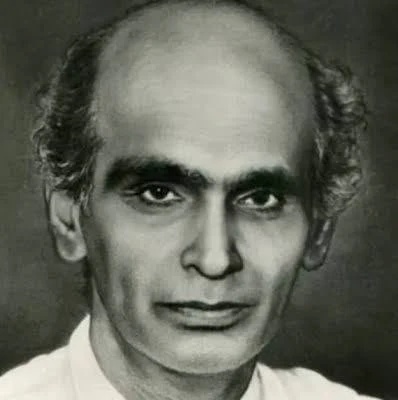
From Bus Conductor to the Edison of India
How a school dropout from Kalangal village built the foundations of Coimbatore's industrial age.
He was born in 1893 in a small village called Kalangal, a few hours from what we now call Coimbatore, into a farming family. He was the kind of boy who asked too many questions and answered too few of them well in a classroom — school ended for him early, in the third standard. He worked as a hotel waiter to save enough for a motorcycle, bought a used 1912 Rudge, and learned engineering by taking it apart.
In 1920, with a loan of four thousand rupees from the Coimbatore industrialist Robert Stanes, he bought a single motor coach and began ferrying passengers between Pollachi and Palani, driving, conducting and repairing it himself. That bus became a fleet: the Universal Motor Service (UMS), which by 1933 ran some 280 buses — one of the largest and most admired transport operations in the Madras Presidency, with an accident record insurers considered the lowest in the world.
But Naidu was a tinkerer at heart, not a transport man. The bus led him to the engine, the engine to the lathe, the lathe to the workshop — and by the late 1930s that workshop had produced a fully indigenous electric motor, built from Indian parts, with no government grant and no foreign collaboration behind it. What followed was a quarter-century of invention that earned him the name Coimbatore still uses: the Edison of India.
"He could not sit through a classroom. So he built one out of the world."
The Inventor Who Built India Before India Could
A motor, a fan, a razor, a radio, a vote machine — a one-man indigenous industry from a Coimbatore workshop.
Across more than a hundred credited innovations, the pattern repeats: Naidu looked at an everyday object India imported, took it apart in his mind, and rebuilt it around materials and manufacturing methods available at home.
The kerosene-run fan — in an India where electricity reached only the privileged few, Naidu built a fan powered by a kerosene flame instead, so it could go wherever kerosene went: everywhere. The five-valve radio — in 1941, he announced he could manufacture full-featured radio sets for seventy rupees, a fraction of the price of an imported set, through his UMS Radio Industry. The tamper-proof vote-recording machine — decades before India's Electronic Voting Machines, Naidu designed a mechanical device to record votes in a way no one, including its own operator, could quietly alter. The ticket-issuing machine — born from the leakage he saw in his own bus fleet, a machine that bound the act of collecting a fare to the act of recording it, an early exercise in what we'd now call audit control. Gopal Clock Industry — at a time when precision clockmaking was considered proof of a nation's engineering maturity, Naidu's factory built clocks in Coimbatore rather than importing them. The special fruit juice mixer — a compact electric juicer built for household and street-vendor use, at a time when juice extraction meant slow, wasteful manual pressing.
Each device typically produced a new workshop and a new payroll: New Electric Works, Universal Radiators, UMS Radio Industry, Coimbatore Diesel Products, Gopal Clock Industry and others — together turning Coimbatore into a city where a young man could be trained, employed and inspired entirely within an indigenous industrial ecosystem.
The 1937 Motor: How an Indian Built His Own
In a workshop in Coimbatore, at a moment when almost every piece of electrical equipment in India was imported, Naidu designed and built an electric motor of his own.
The object survives today in a glass case at the GD Naidu Science Museum, Coimbatore — a small electric motor cased in metal, its maker's plate reading United Motor Service, Coimbatore. It is one of the earliest indigenously designed and indigenously manufactured electric motors made in India: not a prototype, but a working product, boxed and dispatched to Coimbatore's textile mills, printing presses and workshops within the same year.
Colonial-era industrial policy was structured to favour imported finished goods over Indian manufacturing — a well-documented pattern across tariffs, procurement rules and technical standards. Naidu was one of a small number of Indian industrialists — alongside figures such as Jamsetji Tata, Sir M. Visvesvaraya and the Kirloskar brothers — who refused to accept that constraint.
Historians are careful about superlatives here, since the Indian electrical industry's pre-1937 history is distributed and imperfectly documented. The defensible claim, and the one this page makes, is that Naidu was among the earliest Indians to design, manufacture and sell an electric motor under his own brand, from his own workshop.
The Razor That Travelled From Coimbatore to Leipzig
An Indian inventor with no engineering degree built the country's first electric razor — and a blade that won recognition in Germany.
In the mid-1930s, Naidu's workshop produced the Rasant: a slim, hand-finished razor with its own UMS Blade, at a time when good razors in India were entirely imported and unaffordable for ordinary households. The blade was, by contemporary accounts, among the thinnest produced anywhere in Asia — precise enough to surprise the European engineers who later examined it.
In 1936, the Rasant and its blade travelled to the Leipzig Trade Fair — the great industrial showcase of central Europe — where they were noticed and honoured among manufacturers from across the continent. The exact citation and category are still being verified against the Leipziger Messe archive, but the underlying fact is well attested in Coimbatore's industrial memory: a small object made by hand in a city most of that audience had never heard of earned recognition on a stage where German precision was the benchmark.
"Germany honoured the blade. India honoured the silence."
The original Rasant sits today at the GD Naidu Science Museum, Coimbatore, alongside the electric motor, the kerosene fan, the UMS Radio and the vote-recording machine.
The Two-Thousand-Rupee Car That India Refused to Build
In 1952, Naidu rolled out a two-seater petrol car priced for the ordinary Indian. The Government of India refused the licence.
By 1952, Naidu — then fifty-nine — had already built India's first indigenous electric motor, an affordable radio, a voting machine and the Rasant razor. He turned the same instinct to the car: a small, frugal, two-seater petrol vehicle, chassis fabricated in-house, priced at roughly two thousand rupees. It ran under its own power. It never went on sale.
The Industries (Development and Regulation) Act, 1951 required a central government licence for scheduled industrial activity, including automobile manufacturing. Naidu applied. The licence was refused, and the car — along with the factory that should have followed it — was set aside. India's first popular indigenous car, the Maruti 800, would not arrive until 1983, priced at roughly forty-seven thousand five hundred rupees: thirty-one years later, at more than twenty times the price.
A long-held account in Tamil industrial memory holds that Mercedes-Benz explored the possibility of a manufacturing partnership with Naidu in this period. This is currently being researched with the Mercedes-Benz Historical Archive in Stuttgart and is presented here as an account under verification, not as a confirmed record.
"Maruti came in 1983. Naidu was ready in 1952. We lost thirty-one years."
The Workshop Never Stopped
Naidu's manufacturing DNA didn't end with the refused licence. On Avinashi Road in Coimbatore today, UMS Technologies — carrying the initials of Naidu's original Universal Motor Service — builds working, drivable replicas of three founding icons of the automobile: the 1886 Benz Patent-Motorwagen, the 1896 Ford Quadricycle, and the 1899 Stanley Steamer. Every part, from cast cylinder heads and crankshafts to hand-shaped Austrian-ash woodwork, is machined or cast in-house, the same insistence on building rather than importing that defined Naidu's own career. As GD Gopal of UMS Technologies put it to Autocar India, the point isn't mass production — it's precision and authenticity, preserving the roots of motoring in a form people can touch and drive. The workshop also builds radial and turbine engines for drones and model aircraft, a small factory proving, once again, that scale was never the prerequisite for excellence Naidu insisted it wasn't.
The Gardener of Gopal Bagh
How the Edison of India turned his farm on Avinashi Road into a laboratory, and the papaya into a prize-winning marvel.
Naidu insisted throughout his life that he was, at heart, a farmer's son, and at his farm and garden, Gopal Bagh, on Avinashi Road, he applied the same experimental discipline to plants that he applied to engines. Working with cotton, maize and papaya, he carried out systematic selection and hybridisation trials decades before such methods became common on Indian farms — drawing visits from Nobel laureate Sir C.V. Raman and engineer-statesman Sir M. Visvesvaraya, both curious to see what he was coaxing out of the soil.
It was the papaya that became the emblem of his agricultural work — strains of remarkable size and sweetness, fruits weighing up to eight pounds at a time when the ordinary market papaya was a fraction of that. Across five shows between 1961 and 1970 — from the Madras State Grape Show in Coimbatore to the All India Banana and Miscellaneous Fruit Show in Madras — his papaya and papaya halwa won first prize five times, the last when Naidu was seventy-six.
He treated seed itself as engineered technology: a 1970 feature reported that seeds from his improved strains commanded as much as ten rupees each. And true to form, he converted a perishable seasonal glut into a shelf-stable product — papaya halwa — anticipating by decades the food-processing principle that Indian agricultural policy would later adopt as doctrine.
The Healer of Coimbatore
The least-known chapter of the Edison of India: forty years of research into the ancient Tamil system of Siddha medicine.
Alongside his engineering and agriculture, Naidu spent four decades on a parallel pursuit: the systematic study and documentation of Siddha medicine. At the Siddha Research Laboratory, Coimbatore — with physician Dr. M. Shanmugavelu — he treated the tradition exactly as he treated a carburettor: collect, test, refine, document.
In 1973, the year before his death, the laboratory published the Siddha Research Pharmacopoeia under Naidu's Industrial Labour Welfare Association: over 550 prepared medicines across fourteen chapters, with a further 251 specific medicines in a fifteenth — "collections of over 40 years" that had been "practically tried and experienced." The book remains freely available in digital archives today.
His remedies for diabetes and leucorrhoea were reported at length by the German press during his stays in Esslingen and Stuttgart in the late 1950s, and family and museum archives preserve a letter of appreciation from the American pharmaceutical company Pfizer acknowledging his contribution to cancer research. Naidu never claimed the status of a modern-medicine doctor; what is not in dispute is the seriousness of the enterprise — a working laboratory, a hospital, clinical observation, and a published pharmacopoeia of more than eight hundred documented preparations.
The Workshop That Hosted a Nation
A Nobel laureate. The architect of modern Mysore. Two Chief Ministers. They did not summon Naidu — they came to his workshop.
The visitors' book of Naidu's workshop and Industrial Exhibition, still held by the GD Naidu Charities in Coimbatore, reads in places like the register of a national assembly. Sir C.V. Raman, India's first science Nobel laureate, visited and is said to have called him "a man in a million" — a phrase whose exact origin is still being traced through primary sources. Sir M. Visvesvaraya, architect of the Krishnarajasagara dam, sustained substantive contact with him, recognising a fellow builder of working things rather than blueprints.
The record also includes an account, currently under archival verification, that Dr. B.R. Ambedkar visited and wrote a letter recognising Naidu's genius. Tamil political leaders K. Kamaraj and C.N. Annadurai — rivals on almost everything else — were both acknowledged visitors, along with President V.V. Giri and, through the accumulated record of her office, Indira Gandhi.
"The state did not honour him. The people who built the state did."
Despite this weight of recognition, Naidu received only a Padma Shri (1967) — never the Padma Bhushan, Padma Vibhushan or Bharat Ratna his record arguably warranted.
'An Astonishing Man': G.D. Naidu Through the Eyes of the World's Press
From Milwaukee to Salt Lake City to Stuttgart, newspapers on two continents tried to explain the self-taught millionaire of Coimbatore.
Between 1940 and the early 1960s, Naidu's travels through America and Europe were followed closely by the local press. The St. Louis Globe-Democrat (1940) marvelled that a man who began with a single bus now ran an enterprise valued at two million dollars. The Milwaukee Journal found his views on American fashion irresistible copy. Salt Lake City's two papers profiled him the same day, one noting his 280 buses ran an accident rate below one per million miles.
The German press went further. The Stuttgarter Zeitung, under the headline "Ein erstaunlicher Mensch" ("an astonishing man"), confessed it would have taken his story for a fairy tale had the facts not been independently confirmed — his workers had not struck once in twenty-five years, and his farm grew "botanical marvels" that Sir C.V. Raman himself had praised. In Esslingen, where he was a repeat guest, the local press covered his medical research, his plant-breeding experiments, and — in a farewell profile — the story of a 1932 shipwreck in shark-infested waters that he survived by drifting until a Russian oil tanker picked him up.
Naidu, unsurpassed in modesty and simplicity, and without equal in versatility of thought and creative energy.— Esslinger Zeitung, farewell profile, January 1962
The Legacy That Outlived Him
A college, an exhibition, a trust, a city. Naidu died in 1974. Coimbatore is still running on what he built.
Naidu's association with the founding ethos of PSG College of Technology remains one of the quieter, most enduring pieces of his legacy — an institution that has trained tens of thousands of engineers on the same frugal, applied, problem-solving principles he lived by. The GD Naidu Industrial Exhibition in Coimbatore, open since the 1940s, still displays the Rasant razor, the 1937 motor, the kerosene fan, the vote-recording machine and the textile equipment in the same cases they have occupied for decades. The GD Naidu Hall remains a venue for the city's major public lectures and convocations, and the GD Naidu Charities continues to support education, science and social welfare across Tamil Nadu.
Coimbatore's status today as one of India's most self-reliant industrial clusters — its textile mills, its precision component manufacturers, its automotive supply chain — did not emerge from nothing. It traces to the workshops Naidu seeded and the temperament he modelled: that a Coimbatore lathe is as good as a Bavarian one, if you respect it the same way. UMS Technologies, still building on Avinashi Road today, is one direct, living thread of that inheritance.
Primary Sources on the Record
Original press clippings gathered during research for G.D.N., held in the studio's archive.


Additional documentation — Leipzig Trade Fair records, GD Naidu Charities archives, and correspondence currently under verification with the Raman Research Institute, the Visvesvaraya National Memorial Trust and the Mercedes-Benz Historical Archive — will be added to this page as sources are confirmed.